A one-year food supply full of rice, dried beans, and oats is useless without a way to cook it. Dried beans require 90 minutes of boiling. Rice requires 20 minutes. Even “just add water” freeze-dried meals need boiling water. Your food storage plan is incomplete without a cooking fuel plan.
This guide covers every practical off-grid cooking method — ranked by reliability, cost, and suitability for different scenarios. For most households, the answer is a quality propane stove with adequate fuel storage, backed by a wood-fire capability. Everything else is a supplement.
The Fuel Math
Before choosing a method, calculate how much fuel you actually need.
Boiling 1 quart of water:
- Propane: approximately 0.05 lbs (0.8 oz)
- Wood: approximately 0.5 lbs (small sticks)
Cooking a pot of rice for four (20 minutes):
- Propane: approximately 0.2 lbs
- Wood: approximately 1–2 lbs
Cooking dried beans for four (90 minutes):
- Propane: approximately 0.6–0.8 lbs
- Wood: approximately 4–6 lbs
One month of cooking for four people (two hot meals/day):
- Propane: approximately 20–30 lbs
- Wood: approximately 90–120 lbs

Instant Pot Duo 7-in-1 (8 quart)
Electric pressure cooker for normal use; the stovetop pressure cooker version is what you want for off-grid. But this stores well and handles any heat source. Get a dedicated stovetop pressure cooker as your emergency unit.
⚠ Affiliate link — we earn a small commission at no extra cost to you.
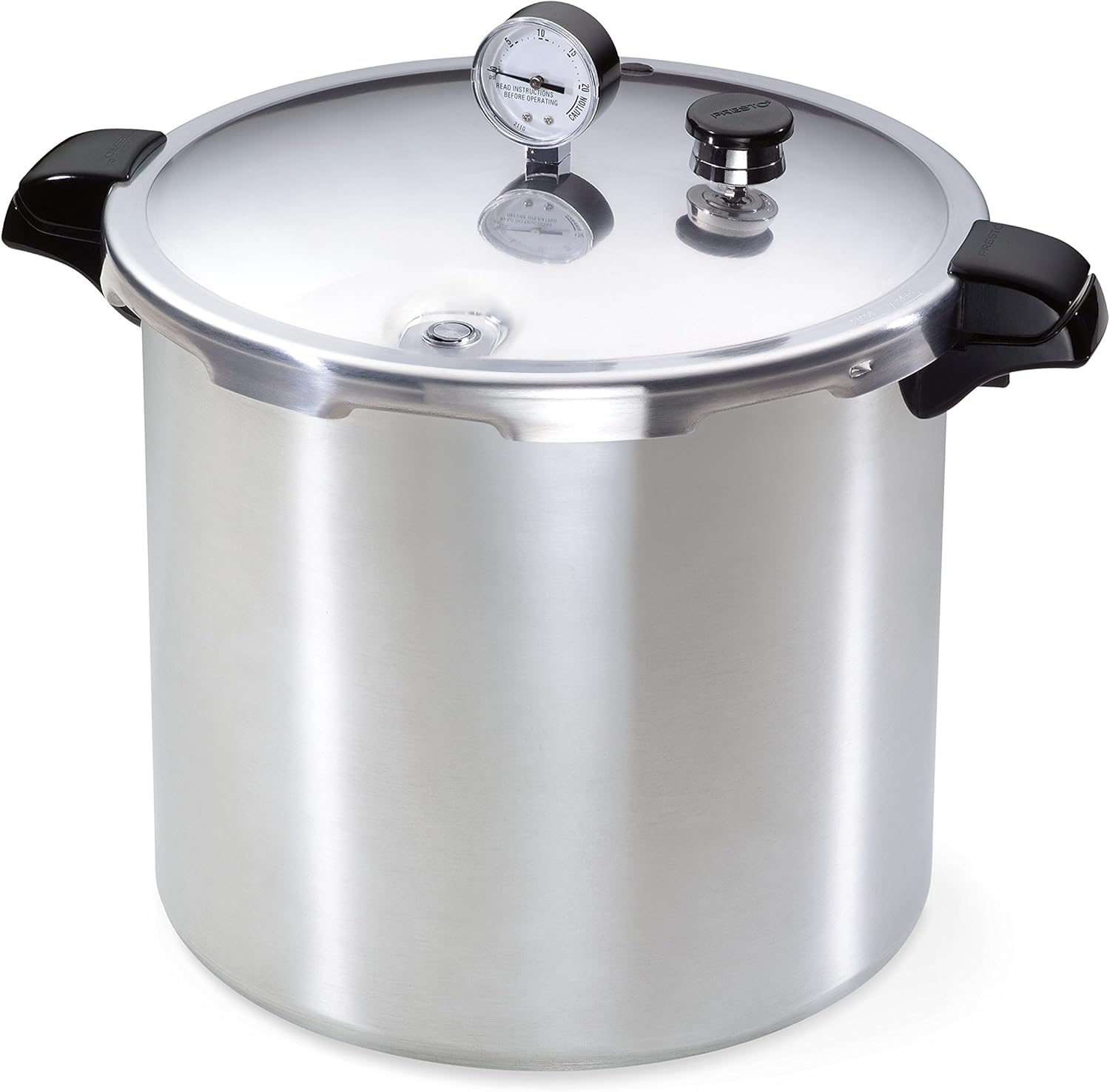
Presto 23-Quart Aluminum Pressure Canner/Cooker
Large stovetop pressure cooker and canner. Works on any heat source including propane and wood fire. Reduces bean cooking time from 90 minutes to 20 minutes. Dual-use for food preservation.
⚠ Affiliate link — we earn a small commission at no extra cost to you.
Method 1: Propane Camp Stove (Primary Recommendation)
A two-burner propane camp stove is the most practical cooking solution for grid-down emergencies. Familiar to use, high BTU output, clean-burning, and the fuel (propane) stores indefinitely in sealed tanks.
Why propane over other fuels:
- Propane stores indefinitely — unlike gasoline (degrades in 1 year) or alcohol (evaporates from poorly sealed containers)
- Widely available in 1-lb cylinders and 20-lb tanks
- Clean combustion — can be used outdoors with minimal ventilation concern
- Familiar — same as a regular gas stove in terms of cooking behavior
For outdoor-only use: Any two-burner camp stove. Never use a camp stove indoors — propane combustion consumes oxygen and produces carbon monoxide. Always cook outdoors or in a well-ventilated garage with the door open.

Camp Chef Everest 2-Burner Propane Stove
Two 20,000 BTU burners. Wind-resistant design. Works with 1-lb cylinders or with hose adapter to 20-lb tanks. Folds flat for storage. The most recommended camp stove for emergency preparedness.
⚠ Affiliate link — we earn a small commission at no extra cost to you.
Fuel storage: Standard 20-lb propane tanks (the same as your gas grill) store indefinitely and are refillable. Keep 2–4 full tanks on hand — that’s 2–4 months of regular cooking. Store outdoors in a shaded area, not in enclosed spaces.
Coleman Propane Fuel 1-lb Cylinders (6-pack)
1-lb propane cylinders for camp stoves. Each cylinder provides approximately 2–3 hours of cooking at medium heat. Good for short outages; pair with 20-lb tank adapter for extended emergencies.
⚠ Affiliate link — we earn a small commission at no extra cost to you.
Method 2: Butane Stove (Excellent Indoor Option)
Single-burner butane stoves are specifically designed for indoor use — a key distinction from propane. They’re compact, clean, and the stoves themselves are inexpensive.
Advantages:
- Indoor-safe with normal ventilation (open a window)
- Compact — fits in a kitchen drawer or bug-out bag
- Inexpensive burner ($25–40)
- Butane canisters store well
Limitations:
- Single burner only
- Butane performance degrades below 32°F — unreliable in cold weather
- Canisters are non-refillable; fuel cost per BTU is higher than propane
Iwatani 35FW Portable Butane Stove
Japanese-made single-burner butane stove. Indoor-safe. 12,000 BTU. Uses standard 8oz butane canisters. Recommended by chefs and preppers alike. Buy 24+ canisters with it.
⚠ Affiliate link — we earn a small commission at no extra cost to you.
Method 3: Wood Fire and Rocket Stoves
Wood is the ultimate backup fuel — it’s free if you have a wooded property, renewable, and cannot run out in the way propane can. It’s also labor-intensive, requires dry storage, and produces smoke.
Open Fire Cooking
Cooking over an open campfire is possible but inefficient — most of the heat escapes rather than reaching the pot. It works and requires no equipment, but it consumes significantly more fuel than other methods.
Basics:
- Use a cast iron pot or Dutch oven — thin pots warp over open fire
- Build a cooking fire differently from a bonfire: lower, hotter, with coals rather than flames
- A simple tripod ($15) or a grill grate over rocks improves control
Rocket Stove
A rocket stove is a simple combustion device that directs airflow through an L-shaped combustion chamber, creating an extremely hot and efficient fire from small fuel — twigs, sticks, scrap wood. Commercial rocket stoves are inexpensive and dramatically more fuel-efficient than open fire cooking.
Why a rocket stove:
- Burns small-diameter wood — no chainsaw or splitting required
- Produces very little smoke compared to open fire
- Hot enough to cook quickly
- Inexpensive ($50–150)
EcoZoom Versa Rocket Stove
Commercial-grade rocket stove. Burns twigs, sticks, or biomass pellets. Cast iron combustion chamber. Produces intense heat with minimal fuel. Works with standard pots and pans. Significant upgrade over open fire.
⚠ Affiliate link — we earn a small commission at no extra cost to you.
Wood Storage
For 30 days of wood-fire cooking: approximately 90–120 lbs of dry hardwood. That’s a small fraction of a cord — an area roughly 2×4×2 feet of stacked split wood. Store covered, off the ground, in a dry location.
Method 4: Charcoal Grill
If you have a charcoal grill, you have an emergency cooking platform. Standard charcoal provides approximately 1 hour of cooking heat per pound at high heat, 1.5–2 hours at moderate heat.
Fuel storage: Charcoal bags store well in dry conditions. 20 lbs of charcoal provides approximately 15–20 cooking sessions. For 30 days, keep 50–60 lbs on hand.
Limitation: Strictly outdoor use only. Carbon monoxide from charcoal combustion is lethal indoors.
Method 5: Solar Oven
A solar oven uses reflected sunlight to cook food without any fuel. Temperatures reach 250–350°F in full sun — adequate for baking, roasting, and slow cooking.
Advantages:
- Zero fuel required
- Silent, safe for indoor-adjacent use
- Capable of baking bread, cooking beans, and preparing complete meals
Limitations:
- Requires direct sunlight — useless on cloudy days, at night, or in winter at high latitudes
- Slow — cooking times are 2–4× longer than conventional methods
- Cannot be the primary cooking method in most climates
Sun Oven All-American Solar Oven
Reaches 360°F in full sun. Cooks, bakes, and dehydrates using only sunlight. Folds flat for storage. Genuine supplemental fuel savings over weeks of use in sunny climates.
⚠ Affiliate link — we earn a small commission at no extra cost to you.
The Recommended Cooking Stack
| Priority | Method | Use Case |
|---|---|---|
| Primary | Propane 2-burner stove + 4× 20lb tanks | All cooking for 3–4 months |
| Secondary | Butane single-burner stove + 24 canisters | Indoor cooking, small meals |
| Backup | Rocket stove or charcoal grill | Extended outages when propane runs low |
| Supplement | Solar oven | Sunny days, reduces fuel consumption |
Essential Cookware for Off-Grid Cooking
Standard non-stick cookware is fragile over uneven high heat. For emergency cooking, prioritize:
- Cast iron skillet (10–12 inch): Indestructible, works over any heat source, multi-generational if maintained
- Cast iron Dutch oven (5–6 quart): Baking, stewing, boiling — the most versatile piece of cookware for emergency use
- Stovetop pressure cooker: Non-negotiable for cooking dried beans and grains efficiently

Lodge 12-Inch Cast Iron Skillet
Pre-seasoned cast iron. Works on propane, wood fire, charcoal, or any heat source. Indestructible with basic maintenance. The single most useful piece of emergency cookware.
⚠ Affiliate link — we earn a small commission at no extra cost to you.

Lodge 5-Quart Cast Iron Dutch Oven
Pre-seasoned. Works over any heat source. Lid doubles as a skillet. For bread baking, bean cooking, stewing, and bulk meal prep. Pairs perfectly with any outdoor cooking method.
⚠ Affiliate link — we earn a small commission at no extra cost to you.
Carbon Monoxide: The Indoor Cooking Killer
Every year during power outages, people die from carbon monoxide poisoning from indoor use of outdoor cooking equipment. The pattern is always the same: a grill or propane stove brought inside “just for a little while” produces CO, the occupants are overcome before symptoms are recognized, and they don’t survive.
Absolute rules:
- Propane camp stoves: outdoors only
- Charcoal grills: outdoors only
- Wood rocket stoves: outdoors or open garage only
- Butane stoves: indoor-safe with open window ventilation
- CO detector required in any space where combustion occurs
A $25 carbon monoxide detector is the single most important safety item in an emergency cooking setup. It’s not optional.
The only emergency situation where cooking indoors is safer than the alternative is extreme cold — and in that case, a butane stove with open ventilation is the correct choice, not a propane or charcoal setup.
Plan your cooking setup now, before you need it. The alternative is improvising with whatever’s available in a crisis — which is exactly how people end up cooking charcoal indoors.