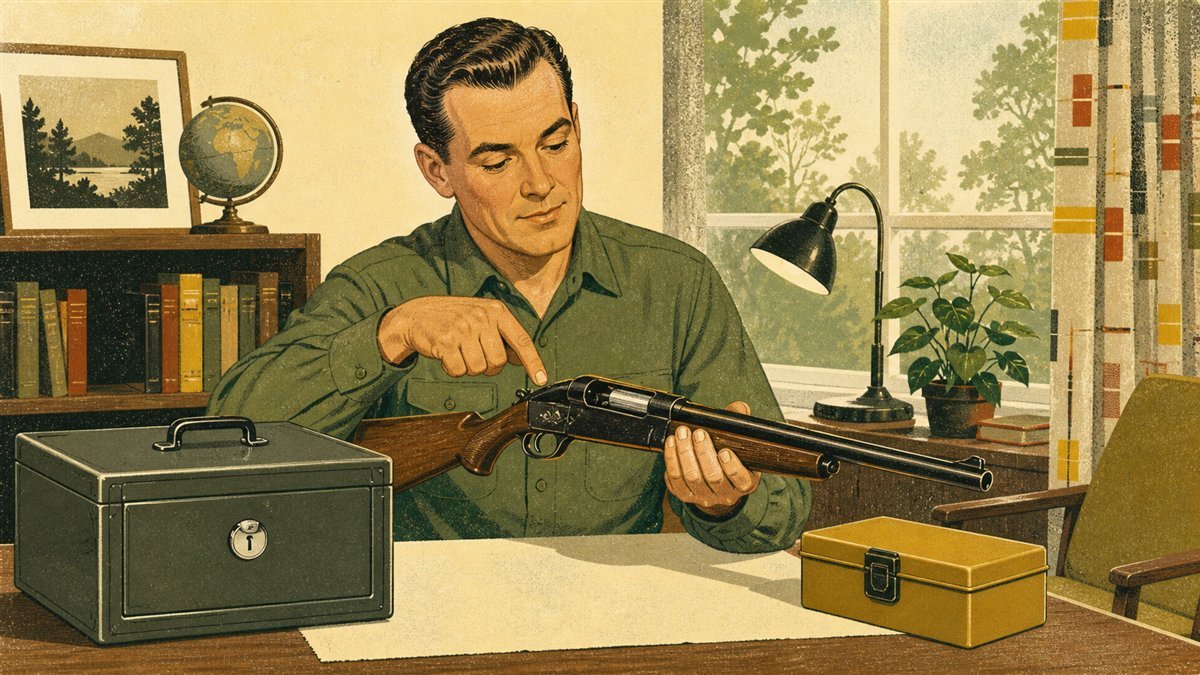
A firearm is not a complete security plan. It adds risks of unauthorized access, theft, mistaken identity, injury, suicide, and legal consequences alongside any defensive capability. Prevention, early warning, secure doors, escape, de-escalation, and emergency communication should come first.
This guide does not tell you which weapon to buy or when force is lawful. Those answers depend on your household, training, health, and current federal, state, tribal, and local law. Start with a qualified local instructor and jurisdiction-specific legal advice.
Decide Whether Ownership Fits the Household
Before purchasing, discuss:
- Whether every adult agrees to the storage and access rules
- Children, visitors, roommates, or vulnerable adults who could gain access
- Depression, suicidal thoughts, substance use, cognitive impairment, or periods of crisis
- The time and budget for competent instruction and recurring practice
- Evacuation, vehicle, interstate-travel, and temporary-storage laws
- Whether non-firearm security layers meet the actual need with less risk
If anyone is in immediate danger, call emergency services. In the United States, call or text 988 for the Suicide & Crisis Lifeline. A crisis plan can include lawful temporary off-site storage through a trusted eligible person, dealer, range, or law-enforcement option where available; verify local transfer and return rules first.
The Four Handling Rules
The ATF’s firearm-safety guidance begins with rules that apply every time:
- Treat every firearm as if it is loaded.
- Keep the muzzle pointed in a safe direction.
- Keep your finger off the trigger and outside the trigger guard unless you intend to fire.
- Know the target and what is around and beyond it.
Wear appropriate eye and hearing protection at a range. Learn loading, unloading, malfunction handling, and field stripping for the exact model from its manual and an instructor. Do not rely on a generic internet sequence.
Get Training Before Choosing Equipment
Rent or try several suitable firearms under qualified supervision before buying. Fit, recoil management, safe controls, reliability with the intended ammunition, and the user’s ability to operate the firearm matter more than popularity or caliber slogans.
A useful beginner course should cover:
- Safe handling and range commands
- Loading, unloading, and verifying an empty chamber
- Storage and transport
- Malfunctions without unsafe improvisation
- Judgment, avoidance, de-escalation, and emergency response
- Current local use-of-force and carry law
Practice frequency is individual. Use an instructor-defined standard and document it. Dry practice must use a verified unloaded firearm in a room with no live ammunition, aimed at a safe backstop, under a deliberate written routine.
Secure Storage Is Part of Ownership
The ATF recommends unloading firearms before storage, locking them in a secure location accessible only to responsible adults, and keeping ammunition locked away. State and local requirements can be stricter, particularly where children are present.
Choose a listed lock box, safe, gun case, cable lock, or other device compatible with the firearm and household. Secure portable containers to the building where appropriate, protect keys and combinations, and test that no unauthorized person can reach or defeat the setup. A biometric reader should have a tested backup-access and power plan.
Vaultek VT20i Handgun Safe
Product example only. Verify current specifications, compatibility, safety instructions, price, and availability before buying.
⚠ Affiliate link — we earn a small commission at no extra cost to you.
Do not treat a locked glove box or vehicle console as secure long-term storage. The ATF owner-safety publication advises using a secure device, keeping it out of sight, securing the box to the vehicle where possible, and returning the firearm to secure home storage promptly.
Maintain a private record of make, model, serial number, photographs, and purchase information in a secure location separate from the firearm. Report theft promptly as required by local law.
Ammunition and Maintenance
Buy only factory ammunition identified by the firearm manufacturer as compatible with the exact model. Storage quantities are a budget and training decision, not a preparedness standard. Keep ammunition cool, dry, in original labeled packaging, secured from unauthorized access, and away from oils, solvents, heat, and ignition sources. Follow fire-code and landlord rules.
For maintenance:
- Remove all ammunition from the work area.
- Keep the muzzle in a safe direction and finger outside the trigger guard.
- Remove the magazine or ammunition source.
- Open the action and visually and physically inspect the chamber as the manufacturer directs.
- Clean, lubricate, reassemble, and function-check only according to the exact manual.
Hoppe's No. 9 Gun Cleaning Kit
Product example only. Verify current specifications, compatibility, safety instructions, price, and availability before buying.
⚠ Affiliate link — we earn a small commission at no extra cost to you.
Stop if a cartridge fails to fire, the barrel may be obstructed, a part appears damaged, or the firearm behaves differently. Keep it pointed safely and get help from a qualified range officer or gunsmith.
Build the Security Layers First
Use home-defense hardening to improve lighting, doors, alarms, escape paths, and emergency communication. Review non-lethal security options without assuming any tool is harmless. Apply preparedness OPSEC without turning neighbors into presumed enemies.
The safer plan aims to avoid an encounter. If ownership remains appropriate after a sober household review, make lawful storage and qualified training conditions of purchase—not future upgrades.