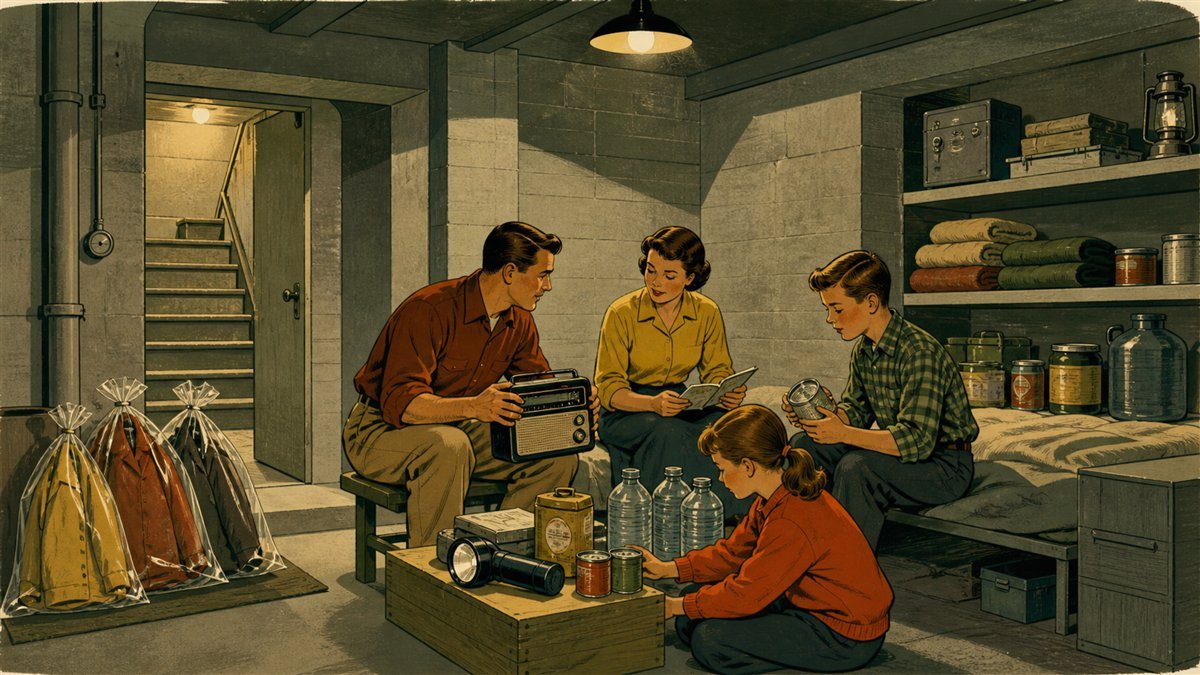
The core public-health instruction for a radiation emergency is simple: get inside, stay inside, and stay tuned. Do not delay to find a perfect bunker or drive through fallout without official direction.
The Ready.gov nuclear-explosion guidance and CDC radiation-emergency guidance should override any generic timeline in this article.
If There Is a Flash or Warning
- Do not look at the flash.
- Drop or move behind available cover to reduce blast and flying-debris injury.
- As soon as it is safe, enter the nearest substantial building.
- Move toward a basement or the middle of a large building, away from roof and exterior walls.
- Stay where you are unless the building is on fire, collapsing, or officials direct movement.
Family members in different safe buildings should remain sheltered rather than attempting an immediate reunion. Use the household communication plan when networks permit.
Remove External Contamination
If you were outside after fallout began:
- Remove the outer layer of clothing carefully without shaking it.
- Bag it and keep it away from people and pets.
- Shower with soap and water if available; do not scrub harshly or use conditioner.
- If no shower is available, gently clean exposed skin and hair with a wet cloth or wipe.
- Cover cuts to keep radioactive material out.
Follow the CDC’s decontamination instructions and local authorities. Help children and people who need assistance while avoiding ingestion of dust.
Stay Inside and Stay Informed
Use sealed food and water that were indoors. Packaging can protect contents even if dust is on the outside; clean the package before opening as officials direct. Do not consume garden produce or outdoor water until authorities say it is safe.
Conserve phone batteries and use text messages. Monitor official radio, emergency alerts, and local instructions. Authorities will account for fallout direction, dose rates, fires, damaged infrastructure, and available routes when advising sheltering or evacuation.
No fixed “24-hour” or “48-hour” rule is safe for every event. Leave only for an immediate building hazard or when officials identify a safer action.
Potassium Iodide Is Not a Fallout Antidote
The CDC says to take potassium iodide only when a clinician, public-health official, or emergency-management official directs. KI protects only the thyroid from radioactive iodine in specific circumstances. It does not protect the rest of the body, block external radiation, or protect against most fallout materials. Incorrect use can cause harm.
Table salt, kelp, and iodine supplements are not substitutes. Do not self-dose.
Prepare the Shelter Area
- Store water, ready-to-eat food, medications, sanitation supplies, masks, and first aid.
- Keep a battery radio, flashlights, spare batteries, chargers, and printed official guidance.
- Identify the best available interior location at home, work, and school.
- Keep shoes, outer layers, bags, soap, towels, and wipes for contamination control.
- Include accessibility, infant feeding, pets, and prescription needs.
- Learn how the building shuts down outside-air systems without disabling life-safety systems.
Use underground and storm-shelter basics for engineered structures, off-grid communications for alerts, and water storage for the shelter supply. Automated military decision-making is one reason escalation risk is getting renewed attention; see AI risk preparedness for how that overlaps with this plan.