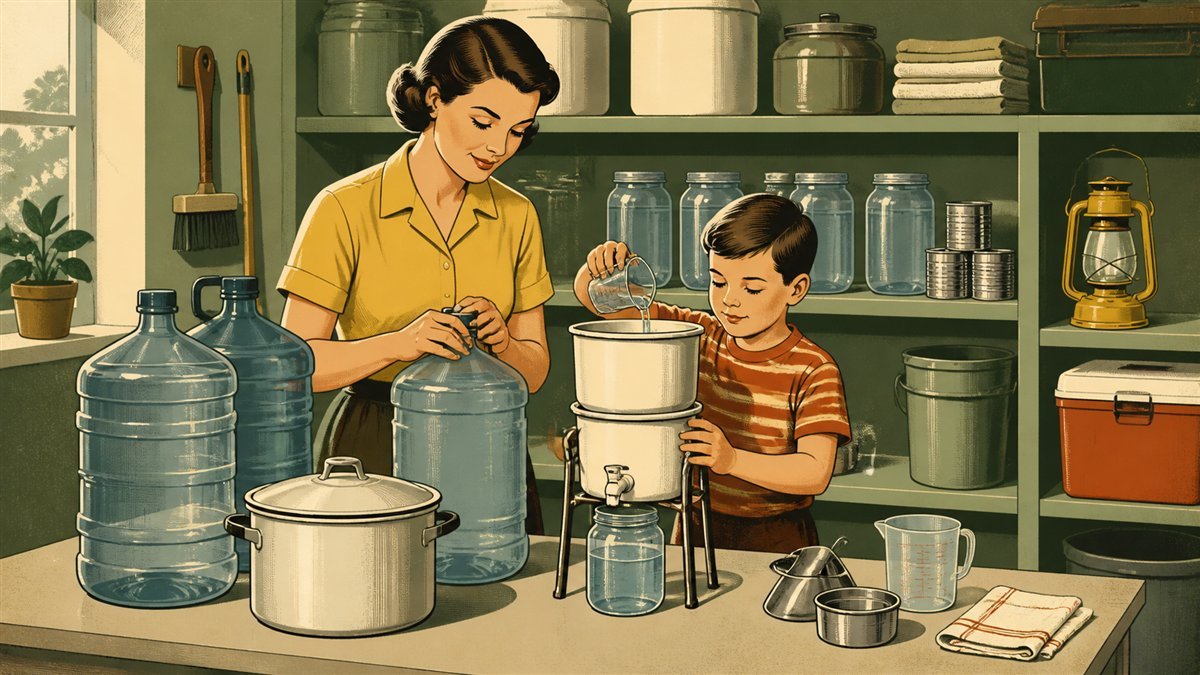
The CDC recommends storing at least 1 gallon of water per person per day for 3 days and trying to store a 2-week supply when possible. That baseline covers drinking, cooking, and limited hygiene; hot weather, illness, pregnancy, pets, and individual medical needs can increase it.
Longer household targets are planning choices, not official one-size-fits-all numbers. Build them only after accounting for space, container safety, structural loads, rotation, and a realistic resupply or treatment plan.
Calculate a Practical Goal
Use 1 gallon per person per day as the starting baseline:
| Household | 3 days | 2 weeks | 30 days |
|---|---|---|---|
| 1 person | 3 gallons | 14 gallons | 30 gallons |
| 2 people | 6 gallons | 28 gallons | 60 gallons |
| 4 people | 12 gallons | 56 gallons | 120 gallons |
Household Planning Tool
Emergency Water Calculator
Calculate the CDC baseline, then add a daily household amount determined with a veterinarian, clinician, or local guidance when needed.
Formula: (people × days × 1 gallon) + (added gallons/day × days).
Weight is water only. Results do not determine pet, medical, climate, sanitation, firefighting, garden, or livestock needs; certify a container; or prove a floor can carry the load. Follow utility and public-health notices during an incident.
Then add water for pets and household-specific needs using advice from a veterinarian or clinician where appropriate. Store separate nonpotable water for flushing or cleaning if space allows.
A thousand gallons weighs about 8,340 pounds before the tank or supporting structure is counted. Large-volume storage requires a suitable foundation, restraint, drainage plan, code compliance, and protection from vehicles, freezing, and children. Ask a structural or tank professional before placing large loads on a floor or elevated platform.
Choose Safe Containers
Commercially bottled water is the safest and simplest emergency supply. Keep it in its original sealed container and observe the manufacturer’s date and storage instructions.
For water you fill yourself, use a container that the manufacturer identifies as food-grade and intended for water storage. A recycling code alone does not prove that a particular container is suitable. Choose a durable, tightly closing container with an opening that limits hand or utensil contact.
Never use a container that previously held fuel, pesticides, toxic chemicals, or other nonfood substances. Those residues can transfer into water and may not be removable. For used food-industry drums or totes, documented history matters; new containers with known specifications are the lower-risk choice.
Portable 5-Gallon Containers
Five gallons of water weighs roughly 42 pounds. Portable containers make rotation and evacuation easier, but they must be designed to stack if stacked at all.
Scepter 5-Gallon Water Container
Product example only. Verify current specifications, compatibility, safety instructions, price, and availability before buying.
⚠ Affiliate link — we earn a small commission at no extra cost to you.
30- to 55-Gallon Drums
A full 55-gallon drum weighs about 460 pounds and is not practically movable. Put it on a stable, level surface before filling, protect it from impact, and keep room to inspect for leaks. Use a clean, food-safe pump reserved for drinking water.
WaterPrepared 55-Gallon Emergency Water Barrel
Product example only. Verify current specifications, compatibility, safety instructions, price, and availability before buying.
⚠ Affiliate link — we earn a small commission at no extra cost to you.
IBC Totes and Fixed Tanks
Large tanks need known food-contact suitability, documented prior contents, screened vents, protected plumbing, overflow control, and a foundation sized for the full load. Local plumbing, zoning, seismic, and rainwater rules may apply. Do not rely on a seller’s claim that a chemical tote was “rinsed.”
Clean and Sanitize Before Filling
Follow the container manufacturer’s instructions first. The CDC’s method for a cleanable food-grade container is:
- Wash it with dish soap and rinse completely.
- Mix 1 teaspoon of unscented 5%–9% household bleach with 1 quart of water.
- Close the container and shake so the solution touches every interior surface.
- Wait at least 30 seconds, then pour out the solution.
- Let the empty container air-dry or rinse it with safe water.
Use regular unscented bleach suitable for disinfection—not scented, color-safe, or splashless products. Keep bleach away from children and never mix it with other cleaners.
Fill, Label, Store, and Rotate
If your public tap water is safe, fill the sanitized container directly. Do not add chemicals unless the water authority, CDC instructions, or a product label calls for it.
- Seal the container without touching the inside of the cap or opening.
- Label it “drinking water” and record the fill date.
- Store self-filled water for up to 6 months, then replace it.
- Keep it at about 50–70°F when possible, away from direct sun.
- Store it away from gasoline, pesticides, solvents, and other toxic substances.
- Keep containers off dirty or frequently flooded surfaces and inspect for leaks or damaged seals.
The CDC’s 6-month replacement interval applies to self-filled containers. Commercial bottled water follows its manufacturer’s storage guidance.
Prevent Recontamination
Pour from the container or use a clean, dedicated spigot. Do not dip hands, cups, or hoses into the stored supply. Clean the dispensing equipment and keep caps off the ground.
If floodwater, pests, chemicals, or a failed seal may have contaminated the supply, do not assume that taste or clarity proves safety. Use another source and follow local public-health guidance.
Add Treatment and Resupply Layers
Stored water should be the first layer, not the entire plan. Keep a safe way to boil water, a treatment option matched to local hazards, clean receiving containers, and printed instructions. Review water-purification methods before choosing a filter or disinfectant.
If you plan to capture roof runoff, keep it separate from drinking water until it has been tested and treated appropriately; see rainwater harvesting. If an outage is imminent, the grid-down storage guide covers safe household sources.