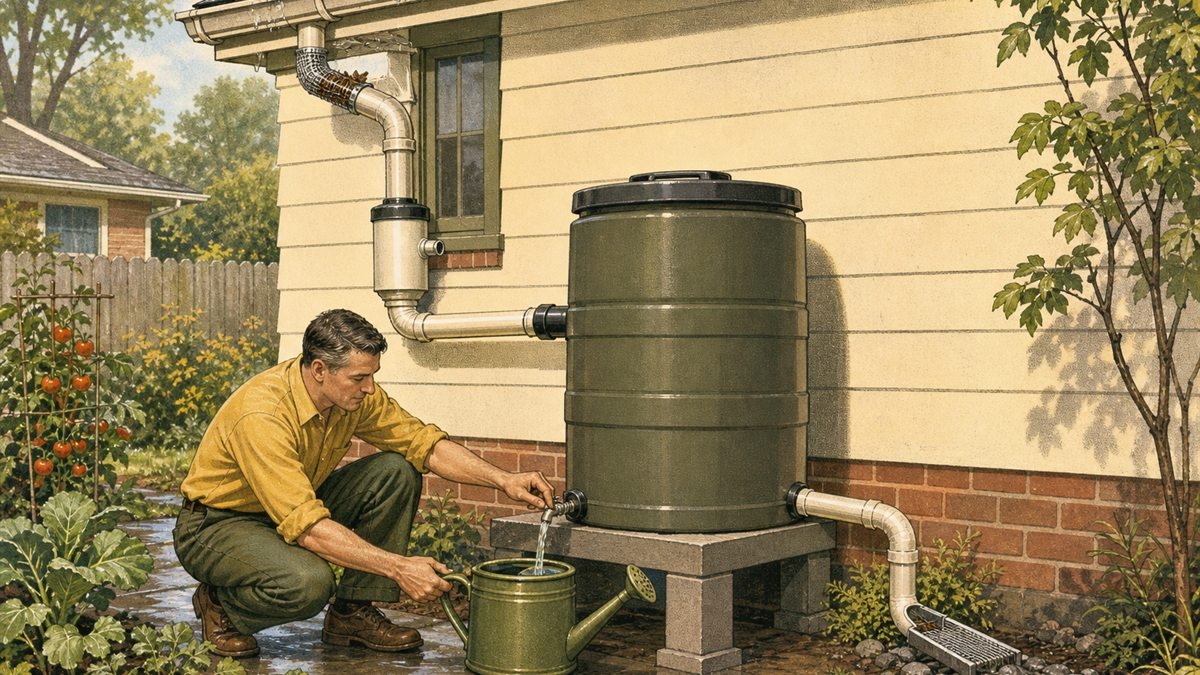
Rainwater can stretch a household supply, especially for irrigation, flushing, and cleaning. It is not automatically safe to drink. Air pollution, roofing, gutters, animal droppings, plumbing, and storage tanks can introduce germs and chemicals.
The CDC recommends using public-system or bottled water for drinking and cooking when possible. If collected rainwater will be used for drinking, cooking, bathing, or other body-contact uses, involve the health department, test for local hazards, and use treatment designed for the results.
Check State and Local Rules First
Rainwater rules change and can involve water rights, plumbing codes, cross-connection controls, permits, mosquito abatement, tank placement, and potable-water standards. Do not rely on a static state-by-state legality table or assume an emergency exemption.
Start with the Department of Energy’s state rainwater-harvesting tool, then verify the current rule with your state agency, local building department, and health department. A legal irrigation barrel is not necessarily an approved potable system.
Estimate Collection Without Overbuilding
The theoretical yield is:
roof footprint served (sq ft) × rainfall (in) × 0.623 = gallons
Multiply that result by a conservative collection-efficiency factor to account for first flush, splash, gutter overflow, leaks, and tank overflow.
For example, 2,000 square feet receiving 3 inches of rain has a theoretical yield of about 3,738 gallons. At 80% collection efficiency, that is about 2,990 gallons—but only if the entire roof drains to the system and storage is available. Size each downspout’s catchment separately and provide safe overflow away from foundations.
Build From Nonpotable Use Upward
Rain Barrel
A screened barrel connected through a compatible downspout diverter is a manageable way to collect irrigation or flushing water. Place it on a stable, level base rated for the full load; 50 gallons of water weighs about 417 pounds. Secure it against tipping and child access.
RTS Home Accents 50-Gallon Rain Barrel
Product example only. Verify current specifications, compatibility, safety instructions, price, and availability before buying.
⚠ Affiliate link — we earn a small commission at no extra cost to you.
Linked Barrels or a Cistern
Multiple vessels require balanced plumbing, isolation valves, screened vents, accessible cleaning points, controlled overflow, and a base designed for the total weight. Fixed tanks may trigger permits or setbacks.
Use only tanks documented for the intended water use. Never repurpose a tote that held chemicals, even if a seller says it was rinsed. Protect above-ground plumbing from freezing and sunlight as the manufacturer directs.
Keep Contamination Out
A complete collection system should address:
- Overhanging branches, leaves, and animal access
- Gutter and roof maintenance
- A screened inlet, vent, and overflow
- A first-flush device sized for the actual roof and local conditions
- Mosquito exclusion and routine inspection
- A way to drain, clean, and safely sample the tank
The CDC advises keeping mosquitoes out with screens and, where relevant, emptying containers at least every 10 days. Follow local vector-control guidance for large tanks that cannot be emptied.
Rain Harvesting First-Flush Diverter
Product example only. Verify current specifications, compatibility, safety instructions, price, and availability before buying.
⚠ Affiliate link — we earn a small commission at no extra cost to you.
A first-flush diverter reduces some debris; it does not make rainwater potable. There is no universal gallons-per-square-foot setting that works for every roof and climate.
Evaluate the Roof and Site
Roof material alone cannot establish drinking-water safety. Coatings, flashing, solder, moss treatments, wildfire ash, nearby industry, pesticide drift, bird and rodent activity, and system age all matter. Avoid collection from surfaces containing lead, asbestos, treated wood, or an unidentified coating until a qualified local authority has assessed the use.
After wildfire smoke or ash, a chemical release, roof treatment, or major construction, disconnect or divert the system until local officials say collection can resume and the system has been cleaned as directed.
Match Water Quality to the Use
Lower-Exposure Uses
Subject to local rules and site hazards, collected rainwater is often most useful for:
- Landscape irrigation appropriate to the plants and water quality
- Toilet flushing when code-compliant plumbing is available
- Outdoor cleaning that does not create ingestion or aerosol exposure
Do not assume pets or livestock are less sensitive than people. Ask a veterinarian or agricultural extension service about safe water for the species and contaminants involved.
Drinking, Cooking, and Bathing
The CDC advises regular testing when rainwater is used for drinking, cooking, or bathing. Ask the health department which microbial and chemical tests apply locally and use a certified laboratory where required.
Treatment must be selected from those results. Sediment filtration alone does not disinfect. Boiling can kill germs but does not remove many chemicals. A countertop or portable filter should be used only for contaminants the exact model is documented and maintained to reduce. See water-purification methods compared.

Berkey Countertop Gravity Filter
Product example only. Verify current specifications, compatibility, safety instructions, price, and availability before buying.
⚠ Affiliate link — we earn a small commission at no extra cost to you.
Maintenance Checklist
- Inspect roof, gutters, screens, first flush, tank, and overflow on a written schedule.
- Remove debris and correct mosquito access promptly.
- Label outlets “NONPOTABLE” unless the system is approved and maintained for potable use.
- Keep rainwater and safe piped water separated.
- Drain or winterize components according to the manufacturer and local climate.
- Test on the schedule set by the health department and after contamination events.
- Maintain a separate stored drinking-water supply.