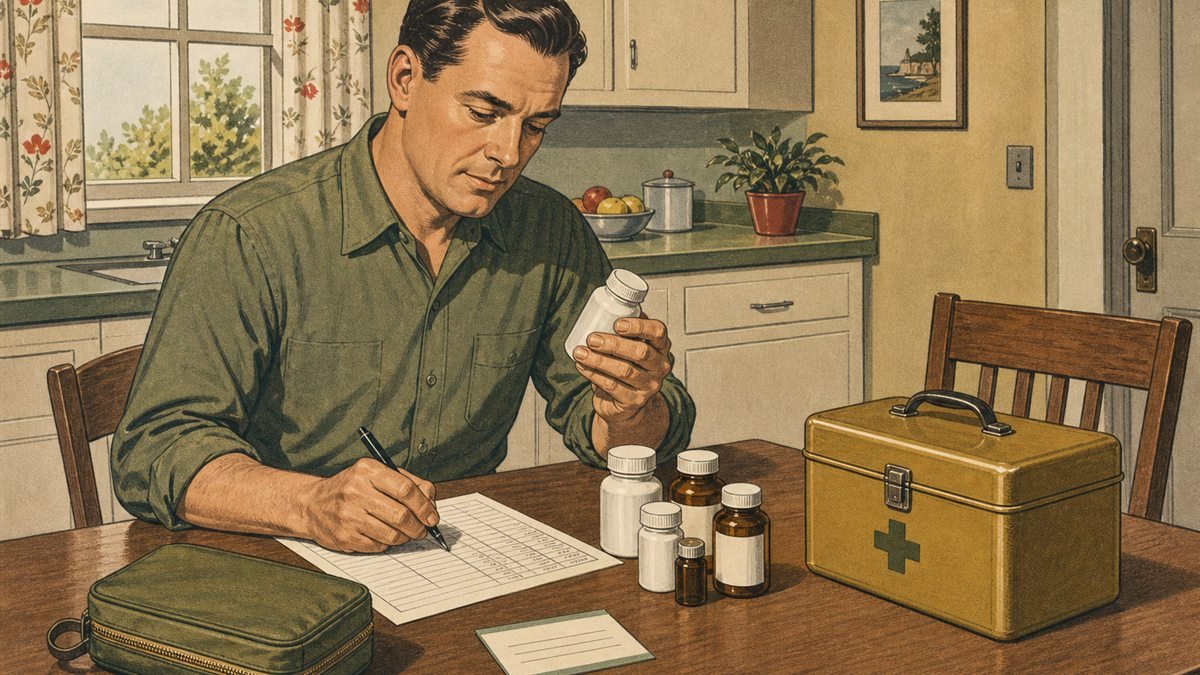
Short answer: medication preparedness is a continuity plan, not a pile of extra pills. Keep a current medicine record, know how many days remain, ask the prescriber and pharmacist what lawful refill options apply, protect medicines from heat and water, and rotate them before expiration.
The FDA’s disaster guidance recommends knowing how much medicine is on hand, keeping an up-to-date list, seeking early refills when pharmacy access may be disrupted, and protecting packages from water damage. Start before a storm is forecast or roads close.
First Actions This Week
- Make one current medication record. Include prescriptions, OTC medicines, vitamins, supplements, allergies, and emergency contacts.
- Count days, not containers. Record how many days of each essential prescription remain at the current prescribed schedule.
- Ask about a suitable reserve. Contact the prescriber and pharmacist before the next predictable hazard season.
- Map the refill path. Record the pharmacy number, prescription numbers if available, insurer number, and an accessible backup pharmacy.
- Plan for temperature and power. Identify every refrigerated, frozen-sensitive, light-sensitive, or device-dependent item and use its product-specific instructions.
- Protect and duplicate the record. Keep a paper copy with the household emergency medical kit and an accessible digital copy.
This is a planning checklist. The amount, medication choice, and emergency action must come from the patient’s prescriber, pharmacist, current label, and care plan.
Build a Medication Record That Works Under Stress
The FDA medication-list guidance explains that a current list helps clinicians and first responders reduce medication errors and interaction risks. Use a format that is quick to update and readable without unlocking one person’s phone.
| Record field | What to enter |
|---|---|
| Person | Full name, date of birth, and an emergency contact |
| Allergies | Medicine and other serious allergies, plus the known reaction if documented |
| Medicine | Prescription, OTC, vitamin, or supplement name |
| Strength and form | Exactly what appears on the current label |
| Purpose | The condition or symptom it is used for |
| Instructions | The current label or prescriber’s instructions; do not recreate from memory |
| Prescriber and pharmacy | Names, phone numbers, and prescription number when available |
| Supply status | Approximate days remaining and next eligible refill date |
| Storage | Product-label requirements, including refrigeration or protection from light |
| Devices and supplies | Pump, monitor, inhaler spacer, syringes, test strips, chargers, batteries, or other required items |
| Last review | Date confirmed with the patient or caregiver |
Update the record whenever a medicine starts, stops, or changes. Share it with a trusted caregiver who may need to speak for the patient.
How Much Medicine Should You Prepare?
There is no universal safe reserve for every person or prescription. A realistic target depends on the condition, refill rules, medicine stability, insurer, local law, supply availability, and the prescriber’s judgment.
Use published kit quantities as prompts, not promises. The American Red Cross general survival-kit list includes a seven-day medication supply, while the CDC diabetes emergency checklist recommends one to two weeks of diabetes medicines and related supplies. Some households need a different plan, and controlled or tightly managed medicines may have strict limits.
Ask these exact questions:
- What reserve is medically appropriate for this medicine?
- Is a 90-day fill, synchronized refill, early refill, or vacation override available?
- What will the insurer cover, and what would an authorized self-pay refill cost?
- Can this prescription be transferred, and what restrictions apply?
- What should the patient do if the usual product or device is unavailable?
- Which storage excursions make replacement necessary?
Rules vary by medicine and jurisdiction. Check current information with the dispensing pharmacy, insurer, prescriber, and state pharmacy board instead of relying on a generic online workaround.
Do Not Create a Reserve This Way
- Do not buy prescription medicine from an unlicensed or unverifiable source.
- Do not use another person’s prescription.
- Do not skip prescribed doses to make medicine last longer.
- Do not combine old and new tablets in one unlabeled container.
- Do not assume an emergency automatically waives controlled-substance or dispensing rules.
- Do not add leftover antibiotics as a substitute for diagnosis. The antibiotics preparedness guide explains why the wrong drug, condition, timing, or course can cause harm and delay appropriate care.
Add OTC Medicines Deliberately
OTC does not mean suitable for every person. Age, pregnancy, allergies, kidney or liver disease, bleeding risk, alcohol use, existing prescriptions, and duplicated active ingredients can change the choice.
Use the FDA Drug Facts label as the decision tool. It identifies the active ingredient, purpose, uses, warnings, directions, inactive ingredients, and storage. Read it when buying and again before use because similar brand names may contain different ingredients.
Instead of copying a universal list, review household needs with a pharmacist:
- Pain or fever options appropriate to each household member
- A written allergy plan and prescribed rescue medicine where applicable
- Gastrointestinal symptom products appropriate to the patient
- Oral rehydration product packets for situations covered by their instructions
- Topical products included in the household’s first-aid plan
- Child-specific formulations and measuring devices where needed
Keep medicines in original, child-resistant packaging. Buy only quantities you can rotate through before expiration, and separate adult and child products clearly.
DripDrop ORS Electrolyte Powder (32-count)
Product example only. Verify current specifications, compatibility, safety instructions, price, and availability before buying.
⚠ Affiliate link — we earn a small commission at no extra cost to you.
Make a Condition-Specific Continuity Plan
The medication record is only one layer. Essential devices, consumables, power, refrigeration, transport, monitoring, and emergency thresholds belong in the same plan. Work through the chronic conditions during a grid-down event checklist with the patient’s clinical team.
Examples of questions to resolve before an outage:
- Which medicines must not be interrupted, and whom should the patient call if access fails?
- Which symptoms or readings require emergency care?
- What equipment depends on wall power, rechargeable batteries, mobile data, or consumables?
- How will refrigerated medicine be transported without freezing or overheating?
- Can a caregiver operate the device and find the written settings?
- Which shelter or evacuation destination can support the person’s medical needs?
Insulin and Diabetes Supplies
Insulin storage and substitution are product- and patient-specific. The CDC’s emergency insulin guidance says to keep insulin as cool as possible without freezing it and away from direct heat and sunlight. If a different insulin type or brand may be needed, work with the doctor; monitor closely and seek medical attention as directed. Also plan for the meter or continuous monitor, strips or sensors, pump supplies, batteries, syringes or other administration supplies, and safe sharps handling.
Do not build a homemade cooling setup that can put medicine in direct contact with ice unless the manufacturer specifically allows it. Freezing can make some temperature-sensitive medicines ineffective.
Store for the Label, Not a Rule of Thumb
There is no single household temperature that covers every medicine. Follow the current label and manufacturer instructions for the exact product.
- Keep medicines in their original labeled containers unless a pharmacist provides an appropriate alternative.
- Protect them from children, pets, heat, moisture, direct light, and contamination as directed.
- Use a watertight outer container where flooding is possible, without obscuring the original labels.
- Keep refrigerated products separate from food contamination risks and monitor storage temperature if the care plan calls for it.
- Never freeze a product unless its instructions explicitly require freezing.
- Keep an evacuation pouch ready for essential medicines and devices, but do not leave temperature-sensitive products in a hot vehicle.
The FDA advises discarding medicines that contacted floodwater or unsafe municipal water, even when some common closures appear intact. If a life-sustaining medicine has been exposed and no replacement is immediately available, contact a pharmacist, clinician, manufacturer, poison center, or public-health authority for product-specific direction rather than improvising.
Expiration and Rotation
Use the labeled expiration date. The FDA explains that the date is supported by stability testing under specified storage conditions. Replace routine stock before it expires and rotate the oldest unexpired package into normal use without changing the prescription schedule.
The federal Shelf-Life Extension Program does not establish a general household exception. It evaluates selected stockpiled products and lots under controlled conditions. It is not evidence that a medicine stored in a bathroom, vehicle, flood zone, or improvised cache remains safe or effective past its label date.
Review the medication system on a recurring schedule and whenever treatment changes:
- Compare the record with current pharmacy labels.
- Check expiration dates and package condition.
- Confirm the refill date and days remaining.
- Test permitted devices and replace aging batteries or consumables.
- Recheck storage instructions and the outage plan.
- Safely dispose of discontinued or expired products using current FDA and local guidance.
Your Next Three Actions
- Complete the medication-record table for every household member.
- Call the pharmacist with the reserve and emergency-refill questions above.
- Put essential records, medicines, devices, and storage instructions through a tabletop evacuation test.
The goal is continuity: the right medicine, for the right person, stored correctly, with a lawful refill path and a clinician-approved backup plan.
Sources and Further Reading
- FDA: Safe Drug Use After a Natural Disaster
- FDA: Create and Keep a Medication List
- FDA: The Over-the-Counter Drug Facts Label
- FDA: Expiration Dates — Questions and Answers
- FDA: Expiration Dating Extension
- CDC: Diabetes Care During Emergencies
- CDC: Managing Insulin in an Emergency
- American Red Cross: Survival Kit Supplies