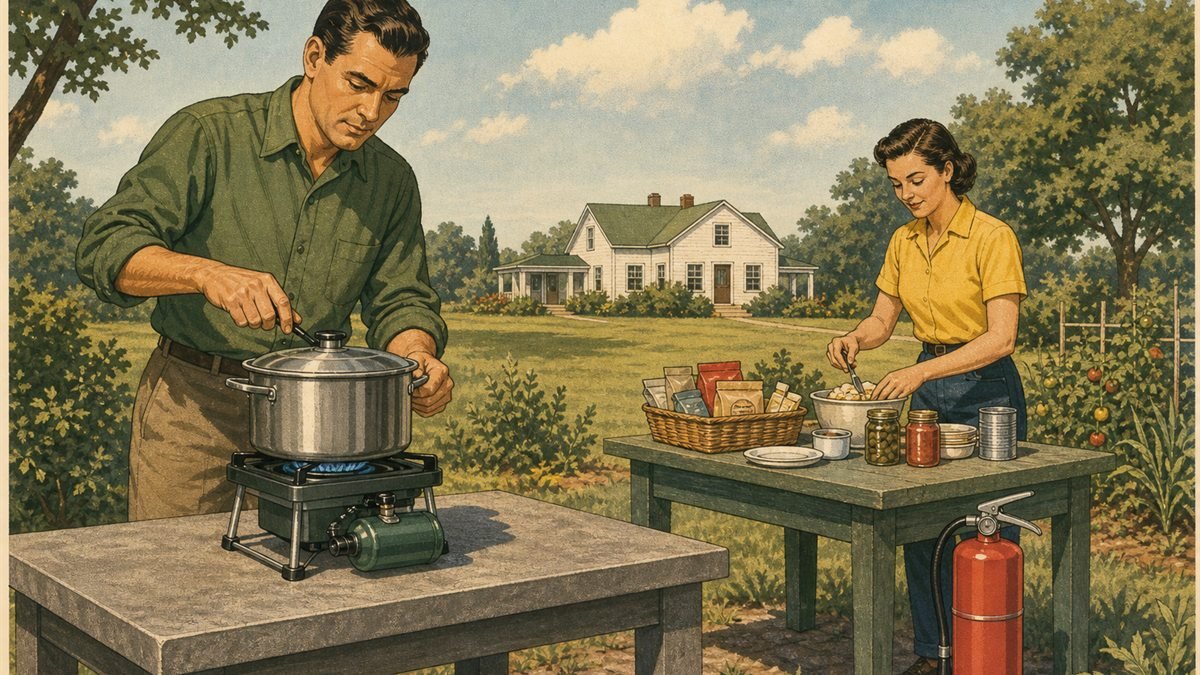
The safest outage meal is often food that needs no cooking. Camp stoves, charcoal grills, and generators produce carbon monoxide; using them in a home, garage, tent, or other enclosed or partly enclosed space can be fatal.
The CDC says never to use a gas range or oven to heat a home and to keep camp stoves and grills outdoors. Follow the appliance manual and local fire restrictions.
Start With a No-Cook Layer
Store foods your household already eats that can be opened and served safely: canned beans, fish or meat, fruit, nut or seed butter, crackers, shelf-stable meals, and medically appropriate alternatives. Include a manual can opener and safe drinking water.
Use refrigerator and freezer food first only while it remains safe. USDA guidance says an unopened refrigerator keeps food safe for about 4 hours; a full freezer about 48 hours and a half-full freezer about 24 hours. Use appliance thermometers and USDA’s outage food-safety rules. Never taste food to decide whether it is safe.
Outdoor Cooking Options
Use camp stoves, charcoal grills, propane grills, and wood fires only outdoors, away from doors, windows, vents, dry vegetation, and combustibles. Place equipment on a stable noncombustible surface and keep children and pets outside the cooking zone.
Coleman Propane Camp Stove
Product example only. Verify current specifications, compatibility, safety instructions, price, and availability before buying.
⚠ Affiliate link — we earn a small commission at no extra cost to you.
Never bring a stove or grill indoors after use while it is still producing combustion gases. Do not use charcoal in a fireplace. Obey burn bans and avoid improvised alcohol or liquid-fuel burners.
Solar Ovens and Retained Heat
A solar oven works only with sufficient direct sun and safe food temperatures. Use a food thermometer and the recipe/appliance instructions; warm is not the same as cooked. Protect it from wind and burns.
Retained-heat cooking can reduce fuel only when food is first heated to the validated temperature and time and is not left for unsafe periods. Do not improvise low-temperature cooking for meat, poultry, eggs, seafood, or leftovers.
Fuel and Fire Safety
- Store cylinders and liquid fuel in approved containers and locations allowed by code and lease.
- Check hoses, seals, and connections as the manufacturer directs; never test leaks with a flame.
- Let equipment cool before refueling or storage.
- Keep an appropriate extinguisher nearby and know how to call emergency services.
- Install and maintain smoke and CO alarms according to local code.
- If a CO alarm sounds or anyone has headache, dizziness, nausea, weakness, chest pain, or confusion, move to fresh air and call emergency services.
Reduce Fuel Demand
Choose quick-cooking foods, soak dry beans only with safe temperature control, use lids, batch meals, and heat only the water required. Do not partly cook food for later unless it can be chilled safely.
Pair this plan with shelf-stable food storage, battery backup for small appliances, and the generator safety guide for electrical loads.