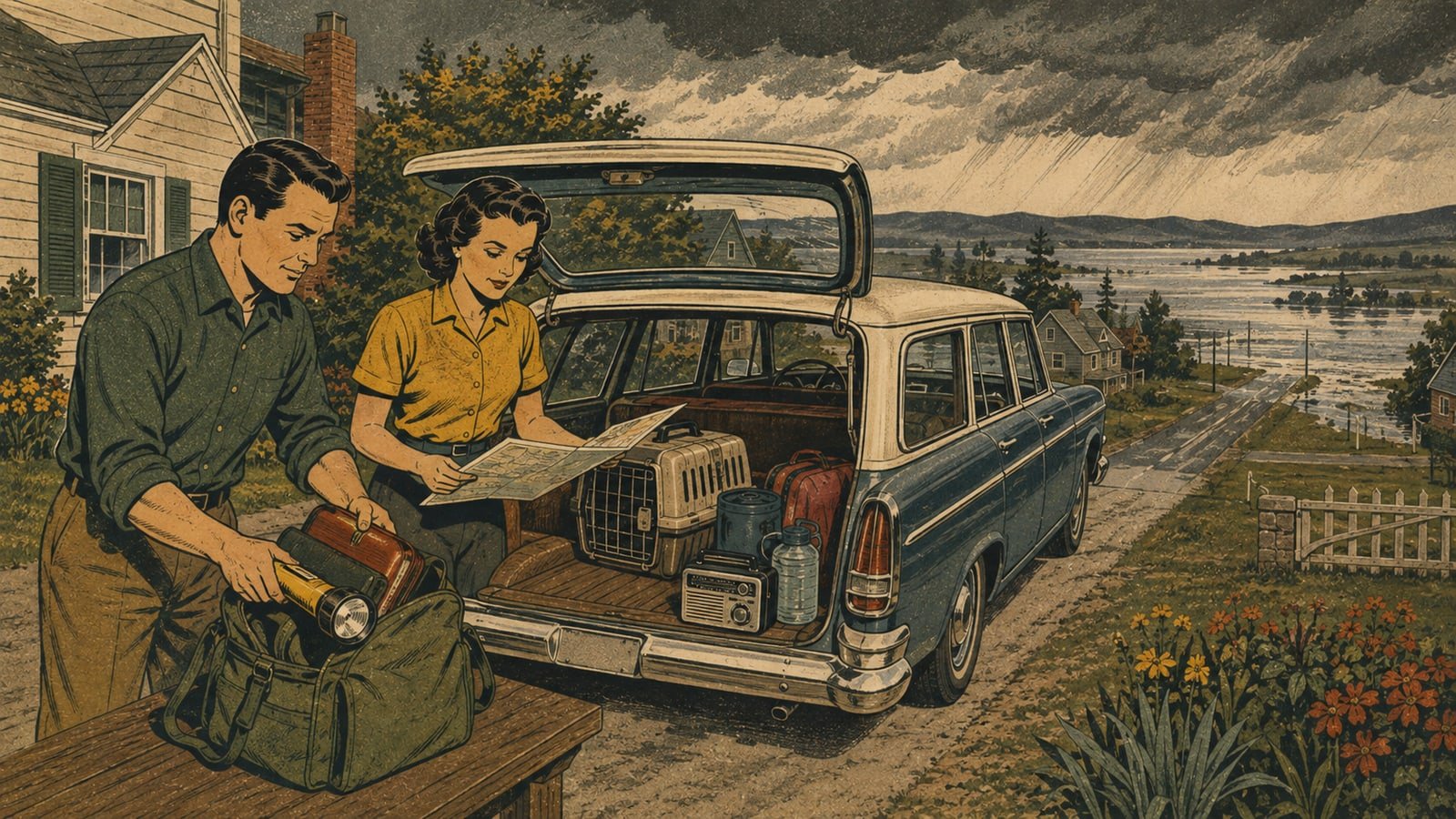
The National Weather Service, citing the CDC, says more than half of flood drownings happen when someone drives into floodwater. This guide is for anyone who lives near a river, creek, coast, or low road. The plan is simple: leave early, stay out of the water, and treat going home as its own safety check.
This guide follows Ready.gov, the National Weather Service, the CDC, the EPA, and FloodSmart. Always follow your local officials first.
The Short Version
Buy this:
- A weather alert radio with spare batteries
- Water and food that needs no cooking, for several days
- Flashlights or headlamps and power banks (no candles)
- A waterproof bag or container for important papers
- Cleanup gear for later: N95 respirators, goggles, heavy gloves, and rubber boots
Do this today:
- Check your flood risk with FEMA’s Flood Map Service Center (linked from Ready.gov’s flood page) and sign up for your community’s alerts.
- Pick two ways out of your area and a place to go on higher ground.
- Ask your insurance agent if you have flood coverage. FloodSmart says most homeowners and renters policies don’t cover flood damage, and a new flood policy usually starts 30 days after you buy it.
- Photograph your rooms and belongings for insurance.
- Save digital copies of your ID and insurance papers in a password-protected place.
What to Buy
NOAA Weather Alert Radio
Can sound an alarm for flood watches and warnings in your area, even if your phone is dead. Look for one with alert (SAME) programming and battery power, and set it to your county.
⚠ Affiliate link — we earn a small commission at no extra cost to you.
Waterproof Document Bag
Keeps your ID, insurance policy, and photos of your belongings dry if you have to leave fast. Check that the closure seals fully before you trust it.
⚠ Affiliate link — we earn a small commission at no extra cost to you.
NIOSH-Approved N95 Respirators
For mold and dust during cleanup. Check for the NIOSH approval marking on the mask, and make sure it fits snugly.
⚠ Affiliate link — we earn a small commission at no extra cost to you.
Rubber Boots and Heavy Work Gloves
Floodwater and mud can hide sharp debris and germs. Pick boots tall enough for the work and gloves that are waterproof.
⚠ Affiliate link — we earn a small commission at no extra cost to you.
For your go-bag list, see the 72-hour kit. For storing drinking water, see grid-down water storage.
Step 1: Before a Flood
- Know your alerts. Keep a weather radio and phone alerts on. Learn what a flood watch and a flood warning mean where you live.
- Plan your way out. Drive both routes on a dry day. Note low roads, underpasses, and bridges over creeks.
- Pick a destination outside the flood area, such as a friend’s home on higher ground, a hotel, or a shelter.
- Plan for everyone. If someone needs a ride, medical power, or help walking, set that up now.
- Move valuables up to higher floors while it’s dry and safe, and keep your go-bag and document bag by the door when heavy rain is forecast.
Step 2: When Water Is Rising
- If officials tell you to evacuate, leave right away by the route they give. Don’t wait to see water.
- Stay off bridges over fast-moving water. Ready.gov warns they can wash away without warning.
- If you’re trapped in a building, go to the highest level. Ready.gov says not to climb into a closed attic, where you could be trapped. Go on the roof only if you must, and signal for help.
- If your car is trapped in fast-moving water, Ready.gov says to stay inside. If water is rising inside the car, get on the roof. Call 911.
- Keep kids and pets away from floodwater, ditches, and storm drains.
Step 3: Going Home Safely
Return only when authorities say it’s safe. Then check the outside before you go in.
Stay out and call for help if you see:
- Downed power lines or standing water near electrical equipment
- A gas smell or hissing sound
- Cracks in the foundation, leaning walls, or a sagging roof
If you smell gas, the CDC says to leave right away and not do anything that could make a spark, like flipping a light switch. Call the gas company or 911 from a safe distance and don’t go back until they say it’s safe.
If the house is damaged, the CDC says don’t go back in until a building inspector has checked it.
When it’s cleared:
- Go in daylight and use battery flashlights, not candles or gas lanterns (CDC).
- Don’t touch the power. The CDC says never turn power on or off, or use electric tools, while standing in water. Have an electrician check the system before the power goes back on.
- Air it out. The CDC says to assume mold is present if the home was flooded and closed up for days. Open doors and windows and air it out for at least 30 minutes before staying.
- Run generators outdoors only, at least 20 feet from any door, window, or vent (CDC). See the generator guide.
Step 4: Document, Then Clean Up
Before you clean or throw anything out, FloodSmart says to:
- Take wide photos and video of each room, plus close-ups of damage and the water line
- Write down serial numbers of damaged appliances and electronics
- Keep small samples of damaged carpet, drywall, or insulation for your adjuster
- Save receipts for repairs, supplies, and replacements
Get more than one written estimate and check that contractors are licensed and insured. FloodSmart warns that demanding full payment up front may be a sign of a scam. Renters should tell the landlord about damage and let the owner handle repairs to the building.
Cleaning up:
- Wear protective gear. The EPA lists an N95 respirator, goggles without vent holes, gloves, long pants, long sleeves, and boots.
- Keep the right people out. Ready.gov says children shouldn’t help with cleanup, and people with asthma, other lung problems, or weak immune systems shouldn’t enter buildings with mold.
- Throw out what can’t be dried. The EPA says mold can grow on things that stay wet for more than 24 hours. Remove soaked materials that can’t be cleaned and dried, after you’ve documented them.
- Clean with water and detergent first. Never mix bleach with ammonia or other cleaners (EPA).
- Leave the HVAC off if floodwater reached it, until a professional cleans it.
- Water and food: follow local boil-water notices, and throw out food that touched floodwater. If your private well flooded, don’t drink from it until your local health department’s testing advice says it’s safe. See the well water guide.
Common Mistakes
- Driving through a “shallow” flooded road. You can’t see the depth, the current, or a washed-out road under the water.
- Waiting for water to show up before leaving. By then roads may be closed.
- Buying flood insurance when the storm is in the news. It usually takes 30 days to start.
- Throwing things out before taking photos. Your insurer may need to see them.
- Running the HVAC to dry the house after floodwater reached it. The EPA says to have a professional clean it first.
Frequently Asked Questions
How much water does it take to sweep away a car?
The National Weather Service says 12 inches of rushing water can carry away most cars, and 2 feet can carry away SUVs and trucks. Never drive into floodwater.
When is it safe to go home after a flood?
Only when local authorities say so. Then check outside for downed lines, gas smells, and structural damage before you go in, and go in daylight.
Does homeowners or renters insurance cover flooding?
Usually not. FloodSmart says most homeowners and renters policies don’t cover flood damage. Renters can buy flood coverage for their belongings. Ask your insurance agent what you have.
Next steps: build a 72-hour kit, make a household emergency plan, and read the hurricane checklist if you live near the coast.